USDA proposes mandatory chip technology for food assistance cards
The agency aims to stop card skimming fraud that cost recipients $470 million last year, though states face higher production costs.
By Anthony Brooks ·
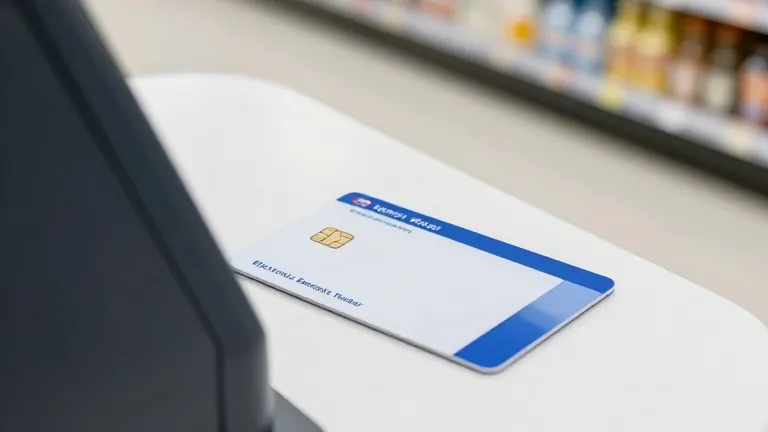
The U.S. Department of Agriculture released a proposed rule last week requiring all states to adopt chip-enabled Electronic Benefits Transfer cards. The move is designed to secure the Supplemental Nutrition Assistance Program against a surge in card skimming incidents. Under the current system, most SNAP cards rely on magnetic stripes, which security experts identify as vulnerable to theft because they store data in an easily accessible format.
Fewer than one-third of states have switched to or are currently transitioning to chip-based systems, according to the USDA. The proposed regulation would mandate this upgrade for all state agencies. It also requires retailers that accept SNAP benefits to install payment terminals that support tap-to-pay functionality. The Food and Nutrition Administration, which manages the program, cited card skimming as the primary reason for the new requirements.
A January report from the USDA Office of Inspector General projected that SNAP theft could reach $233 million between 2025 and 2026, driven largely by skimming. A separate investigation by ProPublica found that $470 million was stolen electronically from recipients last year. That figure was calculated using data from Propel, an application that allows users to monitor their benefit balances. In many states, stolen funds are not replaced, forcing recipients to skip meals or borrow money for groceries.
State officials face financial hurdles in making the transition. The Government Accountability Office notes that chip-enabled cards cost about ten times more to produce than magnetic stripe versions. The proposed rule acknowledges this cost burden and invites state agencies to share their financial concerns. The USDA stated that it views the administrative expenses as a necessary investment to prevent the loss of federal funds.
The agency has a history of supporting this modernization effort. An NPR report from earlier this month noted that the upgrade has support from state officials, federal watchdogs, and members of Congress from both parties. The USDA said the proposed rule has been under development for nearly four years. It estimates that the changes will reduce stolen benefits by at least $1.5 billion over the next decade.
The public has 60 days to submit comments on the proposal before the USDA publishes a final rule. The department is considering a two-year deadline for states to implement the changes from the date of that publication. It is also seeking input on whether that timeline is sufficient. The USDA said it will not provide direct funding for the upgrades, noting that states have had access to administrative funds for years to address the issue.
This initiative aligns with the Trump administration's broader efforts to combat fraud in food assistance programs. Last week, the Justice Department announced that its fraud division uncovered nearly $42 million in schemes targeting food benefits. Those investigations included cases of identity theft and retailers illegally exchanging cash for food benefits.
Source: KOPB-FM · original report published
More News · Portland news · Report a business · Got a Story?