Bank of England Preps First Rate Hike in Three Years
The Bank of England is expected to raise rates to 4% on Thursday to combat inflation driven by energy costs from the Iran war.
By News Media House Staff ·
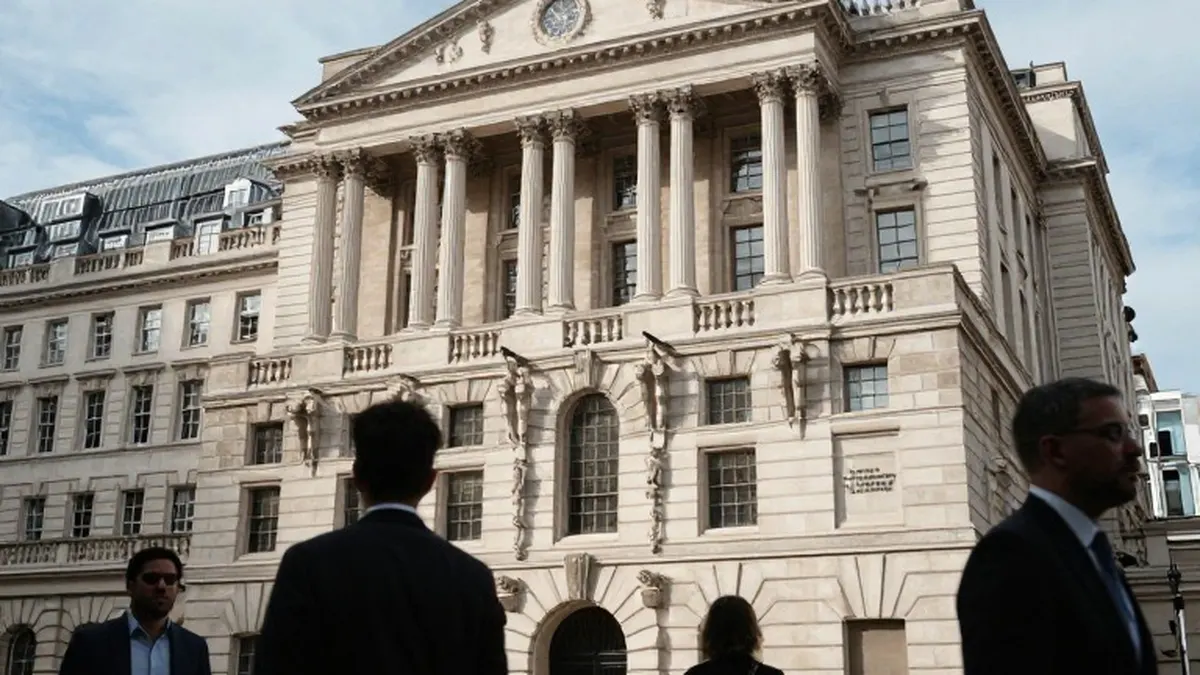
The Bank of England is poised to implement its first interest rate increase in more than three years on Thursday. The move aims to address a significant inflationary shock triggered by the ongoing conflict with Iran. Policymakers are expected to raise the key benchmark rate from 3.75% to 4.0%, marking the first adjustment since August 2023.
This decision follows a period of steady pressure on the Monetary Policy Committee, whose nine members must navigate a challenging economic landscape. Inflation reached an 11-month high of 3.5% in September, significantly exceeding the central bank's 2% target. This sustained rise in prices has cemented market expectations that a rate hike was inevitable for this month.
The primary driver behind this year's inflation surge is the sharp increase in fuel costs. The war in Iran has caused severe bottlenecks in the Strait of Hormuz, a critical chokepoint for global energy trade. These disruptions have squeezed the supply of oil and gas, leading to higher prices that ripple through the broader economy.
Ellie Henderson, an economist at Investec, noted that the patience of many committee members regarding the recent inflation trend has likely worn thin. She warned that if energy prices remain elevated for an extended period, there is a greater risk that what began as a temporary price shock could become a more permanent feature of the economic outlook.
Alongside the rate decision, the bank will release its quarterly economic projections, which will provide updated forecasts for both inflation and economic growth. Higher interest rates typically cool the economy by making borrowing more expensive. This mechanism aims to reduce consumer and business spending, thereby lowering inflation, although it also tends to slow down overall economic growth.
The Bank of England is not acting in isolation. Other major central banks, including the U.S. Federal Reserve and the European Central Bank, have also recently raised their rates in response to rising price levels. This coordinated global approach reflects a shared concern about controlling inflation in the current geopolitical climate.
Prior to the U.S. and Israel attacking Iran in late February, U.K. interest rates had been on a downward trajectory from a 15-year high of 5.25%. The conflict reversed this trend, forcing a reassessment of monetary policy. The upcoming decision is expected to be a pivotal moment in the UK's economic strategy for the remainder of 2026 and into 2027.
Market analysts anticipate that this hike may be the first of several in the coming year. The central bank's guidance will be closely watched for signals about the future path of interest rates. If inflation continues to climb, further increases could be on the horizon, potentially impacting mortgage payments, savings yields, and business investment across the nation.
Originally published by News Media House · Source: ABC News
More News · National news · Report a business · Got a Story?