
Democrats capture both chambers of Congress after midterms
Voters shifted control of the House and Senate to the Democratic Party, with 30% citing democracy's state as their primary concern.
By Samira Khalil ·
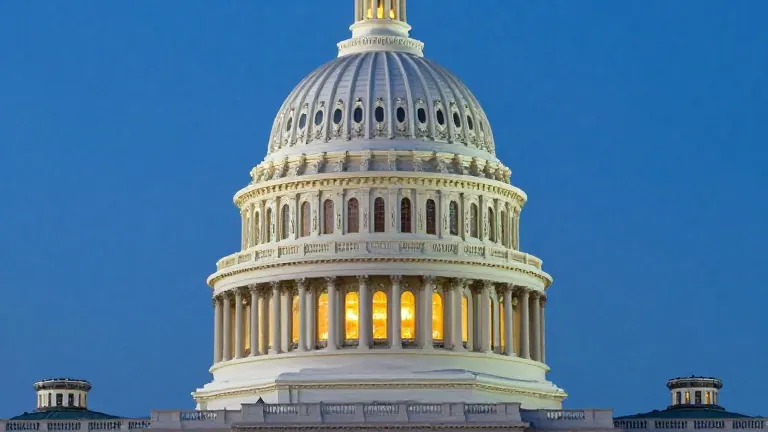
American voters moved the balance of power in Washington on Tuesday, giving the Democratic Party control of both the House of Representatives and the Senate. This shift changes the immediate legislative landscape for President Donald Trump, who now faces a Congress that can block his funding requests and launch investigations. The result signals a desire among voters to strengthen institutional checks on the executive branch rather than allowing the president to rule primarily through executive orders.
The path to this outcome began with widespread frustration over the state of democratic institutions. A post-election survey by the Associated Press found that roughly 30% of voters identified the state of democracy as the country's biggest problem. Additionally, about 70% of respondents felt that Congress had not done enough to provide checks and balances on the president. These sentiments drove turnout among voters who opposed Trump's approach to governing.
Democrats made gains in areas traditionally considered Republican territory. The party won a Senate seat in Kansas for the first time since 1932 and secured victories in Texas and South Carolina. The election also brought a new generation of politicians to federal office, including at least five candidates endorsed by the Democratic Socialists of America. These representatives advocate for strong welfare policies, affordable housing, and greater checks on corporate power.
Brandon Bohrn, an expert on trans-Atlantic relations at the Bertelsmann Foundation, noted that these wins defy previous expectations. "The argument was always that these folks can't win on a national stage," Bohrn said. He suggested that these victories could spark internal debates within the Democratic Party about its platform and strategy for the 2028 presidential election.
For the Republican Party, the defeat triggers an immediate internal debate. Donald Trump took to Truth Social to deflect blame for the loss, though he did not hold himself responsible. Since the Constitution bars Trump from running for a third term in 2028, Republicans must now determine who will lead the party next and on what policy platform. Critics of Trump who had been sidelined may now feel emboldened to challenge his influence over the party's direction.
The election results also have implications for international relations, particularly regarding Iran and Europe. The war against Iran and resulting energy price hikes contributed to the Republican loss. Trump recently announced that he no longer intends to provide billions in military aid to Israel, a decision made shortly before the midterms. This move aligns with a desire to cut foreign policy costs in politically controversial areas.
Ian Lesser, an expert on US foreign and security policy at the German Marshall Fund, stated that the midterm elections make a big difference for Europe. With Democrats controlling Congress, the party has more influence over NATO policy, budget decisions, and military funding. Lesser said that restoring trust and predictability in trans-Atlantic relations is a priority. However, he noted that tariffs remain a complex issue because vested interests in the US support keeping some in place. He added that Congress would likely push back against new, aggressive tariff measures from both sides of the aisle.
Source: Deutsche Welle