Asian Shares Mostly Rise After US Midterms as AI Stocks Slide and Kospi Drops
Most Asian markets gained after a Wall Street rally following the midterm elections, but heavy selling of artificial intelligence-linked shares dragged South Korea's Kospi sharply lower.
By News Media House Staff ·
Asian stocks mostly moved higher on Thursday, taking their cue from a strong Wall Street rally that followed the US midterm elections, which saw President Donald Trump's party lose its sole control of Washington. The Dow Jones Industrial Average surged more than 3%, while oil prices hovered near a two-month low, with Brent crude trading around $94 a barrel.
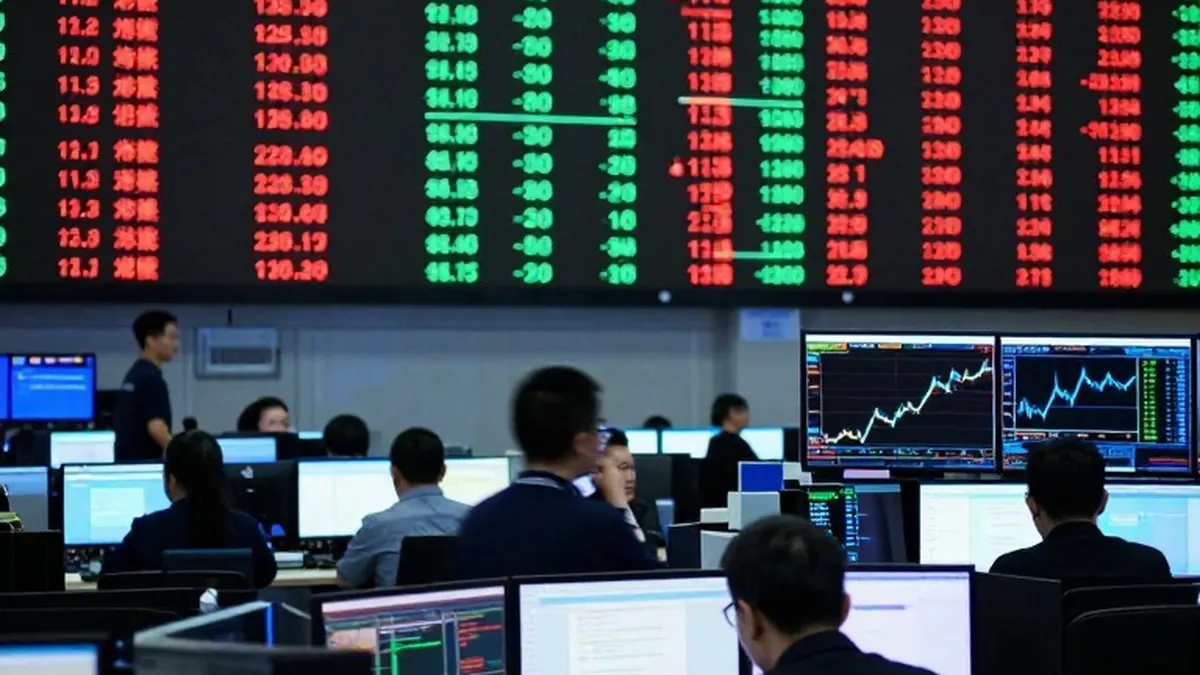
The upbeat mood did not extend everywhere. Shares tied to artificial intelligence came under renewed pressure, and South Korea's Kospi bore the brunt, briefly plunging more than 4% as computer chipmakers were sold off heavily. By late morning the index was down 3.5% at 5,484.38. Samsung Electronics sank 5.7% and memory chipmaker SK Hynix dropped 7.4%.
In Tokyo, the Nikkei 225 slipped 0.5% to 61,914.53. SoftBank Group, an investor in OpenAI, shed 5.3%, chipmaking equipment producer Tokyo Electron skidded 7.7%, and testing equipment maker Advantest tumbled 9.4%. Taiwan's Taiex gave up 1.6%.
Markets with less exposure to the AI sector fared much better. Hong Kong's Hang Seng jumped 2.8% to 24,597.59, the Shanghai Composite edged up 0.1%, and Australia's S&P/ASX 200 rose 1.9% to 9,003.40.
On Wall Street on Wednesday, the S&P 500 climbed 1.6%, the Dow added more than 1,500 points, and the Nasdaq composite rose 1.4%, with hospital operators and dollar stores serving lower-income Americans among the leaders after nationwide Republican losses. US stocks have historically gained after midterm elections regardless of the outcome.
Over the longer term, the election result may matter little to the broad market, since stock prices tend to track company profits and interest rates more than the balance of power in Washington. Still, investors generally welcome split control of government because it reduces the chance of sweeping economic changes.
Some corners of the market face clear risks. Trump Media and Technology Group, whose main business is the Truth Social platform, was among the day's biggest losers, falling 24.5% to $4.49, far below the peak of $175 it briefly touched five years ago. Businesses owned by Elon Musk, a former top Trump adviser who donated heavily to Republicans and is seen as a possible target of investigations by a Democratic-controlled Congress, also struggled, with Tesla down 3.3% and SpaceX off 3.8%.
Defense contractors retreated on the prospect that a Democratic-led Congress could press Trump to pull back on the war with Iran. Lockheed Martin sank 6.9%, Northrop Grumman fell 4.5%, and General Dynamics lost 2.6%. The same expectation sent Brent crude, the international benchmark, plunging 8.7% to $94.62 a barrel, which weighed on oil majors that had rallied for much of the year: ExxonMobil fell 4.6% and ConocoPhillips dropped 5.2%.
Early Thursday, Brent slipped a further 0.8% to $93.91 a barrel, while US benchmark crude fell 1% to $87.27. Cheaper oil typically hurts renewable energy shares by weakening the incentive to switch sources, but Democratic control of Congress could brighten prospects for solar and wind companies, and First Solar rose 4.6% while Enphase Energy climbed 3.7%.
In currency dealings early Thursday, the US dollar eased to 157.96 Japanese yen from 158.41 yen, and the euro strengthened to $1.1256 from $1.1228.
Originally published by News Media House · Source: ABC News
More News · National news · Report a business · Got a Story?