Lula wins Brazil presidency with 50 percent of vote as rival sues for annulment
Flávio Bolsonaro cited a Supreme Court decision on voting hours to demand a new tally, but world leaders are already recognizing Lula's fourth term.
By Samira Khalil ·
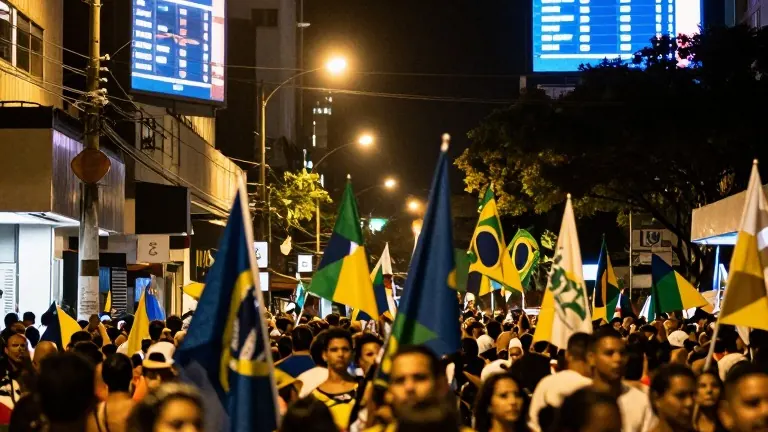
Luiz Inácio Lula da Silva won the Brazilian presidential election on Sunday with 50 percent of the vote, securing a historic fourth term in office. His far-right opponent, Flávio Bolsonaro, refused to acknowledge the result and has formally requested that the election be annulled.
The election marked the culmination of a high-stakes political race in which Lula, Brazil's first elected working-class leader, defeated a challenger seeking to continue the legacy of his father, former President Jair Bolsonaro. The outcome effectively ended a two-year period of political uncertainty and placed a left-leaning government back in charge of the South American giant.
The path to the final vote began with Jair Bolsonaro's own refusal to accept his defeat to Lula four years ago. That dispute escalated into an attempted coup, for which Jair Bolsonaro was later convicted. Flávio Bolsonaro followed a similar pattern this week, citing a specific legal trigger for his challenge.
The core of Flávio Bolsonaro's argument rests on a decision by a supreme court justice to extend voting hours. He contends that this procedural change invalidated the count. His position mirrors the strategy used by his father, who also resisted conceding defeat in the previous cycle.
Tom Phillips, reporting from São Paulo, noted that the Bolsonaro camp's reaction matched his earlier fears. However, he assessed that the move is unlikely to change the final outcome. "All these world leaders are now recognising Lula’s win, and I don’t think Bolsonaro has a hope of overturning this result," Phillips said. He described the victory as the peak of a 50-year political career for Lula, who has helped millions of Brazilians escape poverty.
The immediate political landscape is defined by the consolidation of support around Lula. International recognition has begun to flow in, reinforcing the legitimacy of the new administration. The Bolsonaro family's legal challenge appears to be a procedural hurdle rather than a substantive threat to the transfer of power.
The next steps involve the formal certification of the results by the electoral court. This process will test the durability of the Supreme Court's earlier ruling on voting hours. Until the court rules on the annulment request, Lula will prepare for the transition of power that is scheduled to begin later this year.
The election result places Lula back in the Planalto Palace. He will face the task of stabilizing the economy and addressing social programs that defined his previous terms. The legal battle in the courts will run in parallel with the practical preparations for his inauguration, setting the stage for the next chapter in Brazil's democratic history.
Source: The Guardian