Swift Observatory reenters Earth atmosphere after 22 years
NASA confirmed the telescope's descent near Indonesia following a failed private rescue attempt in September.
By Samira Khalil ·
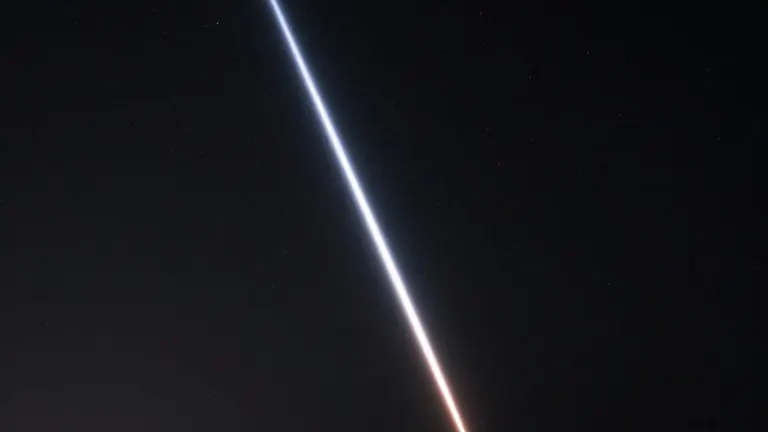
NASA has confirmed that the Swift Observatory, a space telescope dedicated to studying cosmic explosions, has reentered Earth's atmosphere. The spacecraft descended on Wednesday, marking the end of a mission that began in 2004. The U.S. Space Force tracked the falling orbit, which had been accelerated by intense solar activity over the previous few years. The reentry occurred near Indonesia.
The loss of Swift comes less than three months after a private effort to save it failed. NASA commissioned Katalyst Space to build a robotic craft capable of boosting the telescope's orbit. The three-armed vehicle launched in July but encountered technical issues. It crashed in September, leaving Swift to continue its decay unassisted. The failed rescue highlighted the difficulty of servicing aging satellites in low Earth orbit.
Swift was originally designed for a two-year study of gamma-ray bursts and exploding stars. Instead, it operated for 22 years, observing thousands of such events. The telescope served as a first responder, identifying new explosions so that other observatories could direct their instruments for deeper analysis. This extended lifespan was 11 times longer than the initial plan.
The spacecraft weighed 1.5 tons. NASA anticipates that some dense components may survive the reentry, though the exact amount of debris that burned up is not yet known. The agency is monitoring the debris field to assess the impact on other satellites and the ground.
NASA is now evaluating similar rescue options for the Hubble Space Telescope. Launched in 1990, Hubble is also experiencing orbital decay due to solar storms. Recent analyses suggest Hubble will reenter Earth by the mid-2030s. The space agency is seeking input from private companies on potential missions to boost Hubble's orbit, upgrade its systems, or guide a controlled reentry.
Any intervention for Hubble must occur by 2032. Nicky Fox, NASA’s science mission chief, noted that the agency has more time to explore options for Hubble than it did for Swift. NASA Administrator Jared Isaacman stated in a statement that Hubble has important science ahead of it. He added that the agency should examine every reasonable opportunity to keep the telescope operational for as long as possible.