Nintendo releases Ocarina of Time remake with 28-year gap from original
The Switch 2 title, launching Thursday, updates 1998 controls and graphics while maintaining the core narrative structure.
By Lily Carter ·
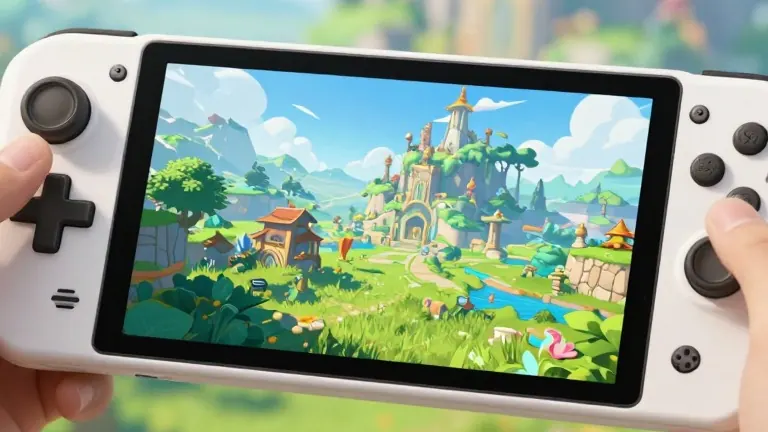
Nintendo has released a remake of The Legend of Zelda: Ocarina of Time for the Switch 2 console. The game launched on Thursday, marking 28 years since the original title appeared in 1998. The new version updates the 1998 experience with modern controls and high-definition graphics while preserving the original story about Link saving a corrupted world.
The original game established a template for 3D action-adventure titles in the late 1990s. It introduced players to a world where the protagonist, Link, battles a villain motivated by a lust for power. The narrative spans two distinct periods. Players first control Link as a child in a post-apocalyptic setting. A seven-year time skip then transitions the player to an adult version of Link who must resolve the remaining conflicts.
Nintendo changed the camera and movement systems to match current standards. The remake uses an over-the-shoulder camera view instead of the original fixed angles. New buttons control jumping and sprinting, making movement feel more natural than the previous system. Combat mechanics are smoother, though switching between targeted enemies remains less intuitive than in modern third-person games. The game abandons the top-down view during specific stealth sections in Hyrule Castle.
Item management has been overhauled to improve gameplay flow. Players can now swap items using a quick menu system similar to those found in 2023’s Tears of the Kingdom and 2024’s Echoes of Wisdom. This allows for faster strategy changes during combat. For example, players can quickly switch between casting magic and deploying bombchus without pausing the game to access the full inventory. A new quest log titled Threads of Time helps guide players who become stuck, although complex quests like the Biggoron Sword retrieval still require external guides.
Economic systems in the new version differ from the original. Players can now carry double the amount of rupees, the in-game currency. However, upgrades from the Great Fairy are no longer free. These upgrades now cost up to 500 rupees. The notoriously difficult Water Temple has been adjusted to be more tolerable for players.
Visual aesthetics have been significantly upgraded with ornate textures and extended animations. The new cutscenes, particularly in the opening hours, are longer than in the original. Some character designs have been altered to fit modern sensibilities. Mido, a character who originally blocked progress in Kokiri Forest, has been rewritten as a well-intentioned but overbearing boss rather than a bully. The talking owl guide, Kaepora Gaebora, no longer repeats dialogue lines. Navi, the fairy companion, also speaks less frequently.
The remake aims to balance nostalgia with modern accessibility. It avoids recreating the dated controls and chunky graphics of 1998. Instead, it evokes the memory of the game while updating its technical foundation. The production values are high, with detailed textures that occasionally clash with the game’s cartoony proportions. Some character designs, such as Nabooru’s, have drawn attention for their modernized makeup and styling.
This release is part of a wider strategy for the Zelda franchise. A Zelda movie is scheduled for release next year. Nintendo has chosen to update this specific title to maintain its relevance for new generations of players. The game serves as a bridge between the classic 1998 experience and future entries in the series. It is positioned as a faithful adaptation that respects the source material while applying modern technical standards.
The game is now available on the Switch 2. It represents the latest entry in a series that has defined the action-adventure genre for decades. The remake retains the core gameplay loop of exploration, combat, and puzzle-solving. It updates the presentation to ensure the title remains accessible to players who did not experience the original. The release concludes a period of anticipation among fans of the 1998 classic.
Source: WLRN