Arab Neighbors Brace for Israeli Coalition Without Major Foreign Policy Shifts
Analysts predict a new Israeli government will maintain border security doctrines despite domestic changes, leaving regional stability in flux.
By Wyatt Cooper ·
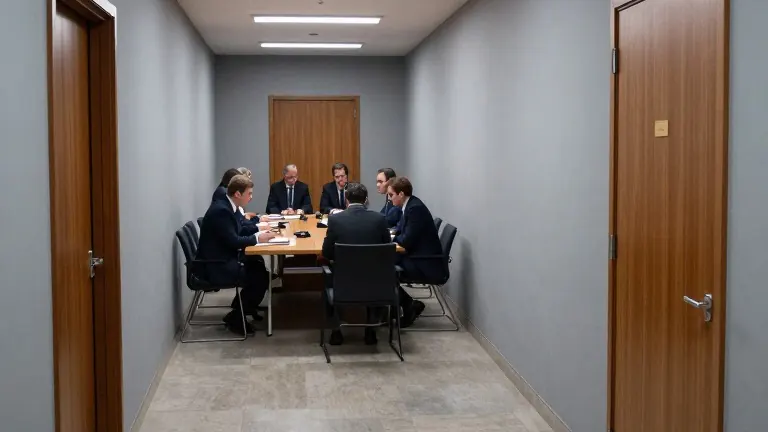
Silence has greeted the latest round of coalition negotiations in Israel.
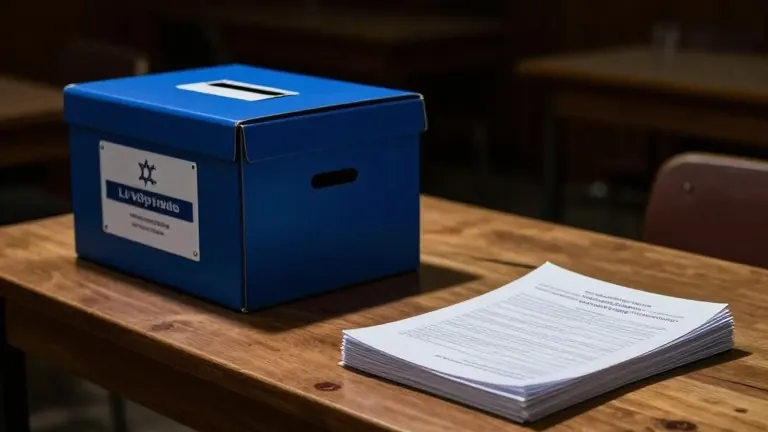
Politicians in surrounding Arab countries have offered few public comments since the election that produced no clear winner. The ambiguity of the outcome has left regional capitals waiting to see whether the new administration will continue the current path or pivot toward a more moderate domestic approach. Most observers agree that the fundamental architecture of Israeli foreign relations will remain intact regardless of who holds the premiership.
Egyptian politician Mostafa Bakry described the candidates as two sides of the same coin. He noted that the potential failure of the incumbent to form a government does not signal a drastic departure from previous policies. Beth Oppenheim, a policy fellow at the European Council on Foreign Relations, warned that a new government would likely be politically fragile. She stated that the primary differences would be internal, including halting the judicial overhaul and opening a state commission of inquiry into the events of October 7, 2023.
Oppenheim argued that foreign policy would not undergo a fundamental transformation. The security doctrine adopted after October 7, which involves pre-empting threats and maintaining buffer zones in neighboring territories, has been embraced by nearly all Jewish Israeli parties. Support for a Palestinian state has collapsed across the Jewish political spectrum. All mainstream parties support or acquiesce in the settlement enterprise, and they publicly oppose a Palestinian state on the 1967 lines. Gadi Eisenkot stated in August that no Palestinian state would be established under his potential government.
In the occupied territories, a less extreme government might tone down religious messaging and contain settler violence in the West Bank. Elizabeth Tsurkov of the Middle East Policy Council explained that suppressing settler extremism is feasible because it damages Israel's international reputation. However, a new government would continue expanding settlements. Without a diplomatic track with the Palestinians, further flare-ups of violence are inevitable. This situation keeps normalization with Saudi Arabia off the table, despite behind-the-scenes cooperation between the two nations.
Syrian think tank Etana reported that Israeli troops have penetrated 1,160 kilometers into Syria. The study detailed 1,996 ground operations in southwest Syria between January and September of this year. Ksenia Svetlova of Chatham House suggested that a security agreement with Syria is more probable under a centrist government. She noted that such an agreement will take time because the new government will face constant attacks from the extreme right. Previous negotiations under U.S. stewardship collapsed after Israel refused to withdraw to the boundary lines established in 1974.
In Lebanon, political circles perceive an Eisenkot-led bloc as easier to deal with than the current administration. The two countries are negotiating an Israeli withdrawal from southern Lebanon, where Israel claims to have established a buffer zone. Although Eisenkot is credited with the Dahiyeh Doctrine, Lebanese commentators see common ground between him and President Joseph Aoun, a former military commander. A Lebanese official recalled that maritime negotiations were successfully concluded during the 2021 and 2022 period when Naftali Bennett and Yair Lapid held power.
Source: Deutsche Welle