Israel Election Too Close to Call as Vote Count Continues
Record turnout leaves Benjamin Netanyahu and Gadi Eisenkot within striking distance, with final tallies expected by Tuesday afternoon.
By Samira Khalil ·
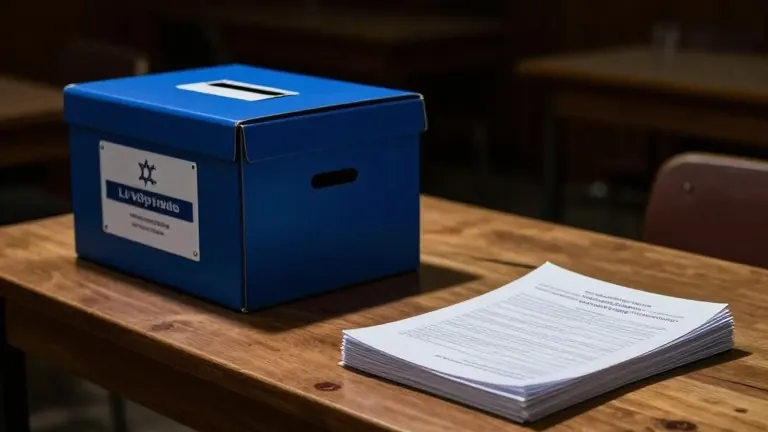
Israeli voters cast their ballots on Monday in an election that has left the nation’s leadership in suspense. The outcome determines whether Prime Minister Benjamin Netanyahu remains in office or steps down in favor of his chief rival. With record participation, the race has tightened considerably as counting proceeds.
The two main candidates are Benjamin Netanyahu and Gadi Eisenkot. Eisenkot is a center-right politician and former military chief of staff. Both men are vying for control of the government. The final vote totals may take some time to compile. If no single political bloc secures a majority, the process to form a new government could last days or weeks.
The situation shifted dramatically between late Monday and early Tuesday. Overnight, Eisenkot appeared to hold the advantage. By the morning, Netanyahu had pulled ahead. Election officials describe the margin as too small to declare a winner. They expect to finish counting all votes by Tuesday afternoon.
The leading candidate will have six weeks to assemble a governing coalition. This task requires negotiating with parties that may be switching sides. Eisenkot has a potential path to a majority through support from Arab-led parties. These groups have expressed a preference for him as prime minister. However, Eisenkot’s team is cautious about partnering with them. This hesitation stems from political mistrust following the attacks of October 7, 2023. Both candidates currently lack a clear, guaranteed path to a majority.
This election takes place against a backdrop of intense domestic and international attention. The stakes involve the direction of Israel’s government for the coming years. The closeness of the race reflects a divided electorate. The final decision will hinge on which candidate can secure enough seats in the Knesset, or parliament, to command a working majority. The process involves complex negotiations among various political factions.
As the count continues, political analysts monitor the pace of reporting from different regions. The final numbers will determine the balance of power in the legislature. The coming days will be critical for coalition building. Both camps are likely to engage in intensive talks with smaller parties. The goal is to lock in the support needed to form a stable government. The outcome will shape Israel’s policy directions in the near term.
The election has drawn high levels of voter engagement. This turnout contrasts with previous cycles where participation was lower. The intensity of the campaign has kept both major parties focused on key issues. The final tally will provide a definitive answer to who leads the country next. The political landscape in Israel remains dynamic as the results emerge.
Source: NPR