Asian energy crisis and trade war persist despite US midterm results
Analysts predict the US-China tech divide will tighten while the Iran conflict and tariff regime remain stable under a new Congress.
By Wyatt Cooper ·
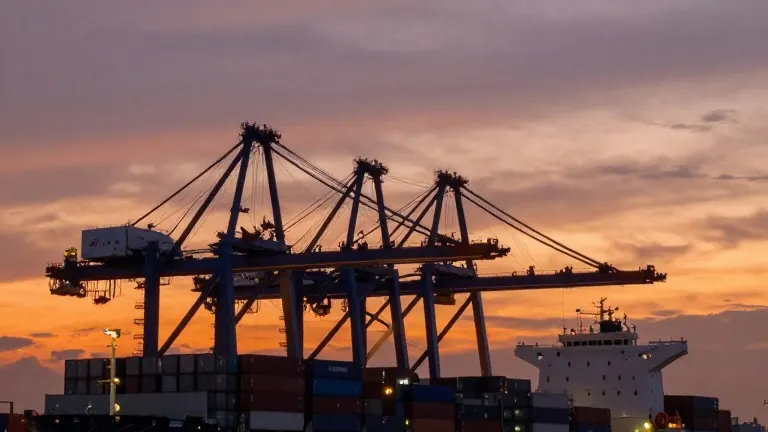
Energy costs remain high across the Asia-Pacific region as governments assess the outcome of Tuesday's US midterm elections. The region has suffered severe supply shocks since January, when the United States and Israel began military operations against Iran. These disruptions have forced several nations to draw down foreign exchange reserves to cover fuel imports and subsidies.
The Philippines is under a national energy emergency declared in March. The country imports more than 90 percent of its crude oil from the Gulf region. Neighboring economies, including Indonesia, Malaysia, Thailand, and Vietnam, have spent heavily on fuel subsidies to protect consumers. Cambodia, Laos, Myanmar, and East Timor have seen their foreign exchange reserves drained by soaring fuel costs, according to the Institute of Southeast Asian Studies.
Steven Okun, chief executive of APAC Advisors in Singapore, described the election as political theater for the region. He told Al Jazeera that a Democrat-controlled Congress is unlikely to end the eight-month conflict. He predicted oversight hearings and a potential impeachment of the defense secretary, but he did not expect the war itself to stop.
Congress holds the constitutional power to declare war, but President Donald Trump has cited self-defense to justify the strikes. He has ignored previous congressional resolutions to withdraw US forces. Even if Democrats pass legislation to restrict military operations or cut funding, Trump can veto the bills. Overriding that veto requires a two-thirds majority in both chambers, a threshold Democrats are expected to miss.
Trade policy faces similar constraints. Trump imposed reciprocal tariffs of 10 percent to 50 percent on roughly 90 countries last year. Cambodia and Laos faced rates of 49 percent and 48 percent, respectively. Vietnam and Myanmar faced 46 percent and 45 percent tariffs. After the Supreme Court struck down those tariffs in February, the administration applied new tariffs of 10 percent and 12.5 percent to goods from 60 partners in July, citing forced labor concerns.
Okun stated that tariffs do not change with the election. He argued that the new Congress will not affect trade policy because the president retains primary control over those measures. Stephen Olson, a visiting fellow at the ISEAS-Yusof Ishak Institute, noted that a strong electoral rebuke of Trumpism could embolden pro-free-trade Republicans. He suggested a Democratic Congress might push for carve-outs for Southeast Asian exporters, though deeper shifts would likely wait until the 2028 election.
Joshua Kurlantzick, a senior fellow at the Council on Foreign Relations, said Asian nations want greater stability in US security guarantees. They seek a clearer US presence in the South China Sea and the Taiwan Strait. Businesses are watching for a Republican willingness to join Democrats in Congress on issues such as arms sales and economic unpredictability.
US policy on Chinese technology is the area where analysts expect the most change. Okun said the new Congress will pass the Remote Access Security Act, the Chip Security Act, and the MATCH Act. These bills aim to extend export controls, verify the location of AI chips, and align ally restrictions on chipmaking equipment. Both parties agree on these measures, and Okun noted that President Trump is currently the least restrictive official on China.
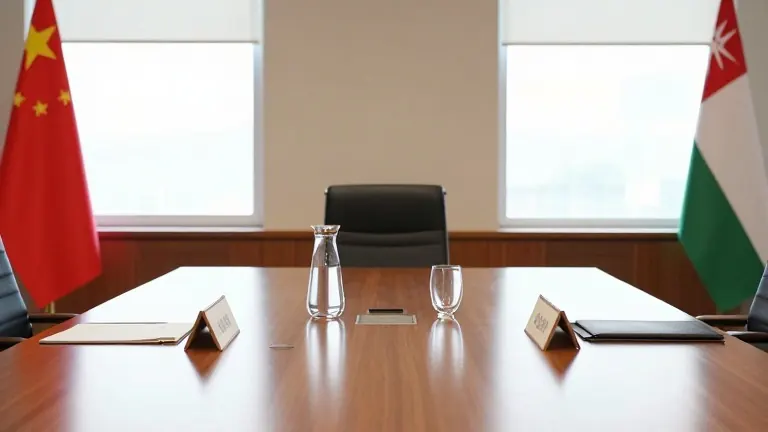
Trump and President Xi Jinping have met twice this year as ties warmed following last year's trade war. To preserve the trade truce, Trump has held off approving a $14 billion package of arms sales to Taiwan. This would have been the largest arms sale in US history for the island.
James Guild, an assistant professor at the Indonesian International Islamic University, warned that a Trump president hemmed in by a Democratic Congress could pivot forcefully to foreign policy. He noted that Democrats have a poor record of holding Trump accountable using conventional oversight tools. He said the region will have to wait and see if they rise to the challenge this time.
Source: Al Jazeera