Breaking: Musk's $300B Loss and the Magnificent Seven's $1T Wipeout
Elon Musk's companies shed billions as chip stocks cratered following the midterm elections.
By Samira Khalil ·

Elon Musk faced a catastrophic week on the markets as Tesla and SpaceX lost more than $300 billion in combined value on Thursday, a drop that mirrored the broader collapse of the technology sector. The loss coincided with a record-setting day of selling for the Magnificent Seven technology companies, which shed approximately $1 trillion in market value in a single trading session. According to BBC News, this decline took a significant bite out of the wealth of one of the world's most prominent business figures, whose companies are central to the artificial intelligence trade that has driven recent market gains.
The financial hit to Musk was compounded by his political expenditures, as he had spent nearly $450 million backing Republican campaigns during the midterm season. A key portion of that sum, at least $45 million, was directed toward supporting Ken Paxton for a Texas Senate seat. That bet failed when Democrats swept the state on Tuesday night, a result that contributed to the broader political shift investors are now pricing into their portfolios. The Guardian and The New York Times reported that the election outcomes have intensified fears that new state and federal regulations will slow the expansion of data centers, a core component of the AI infrastructure buildout.
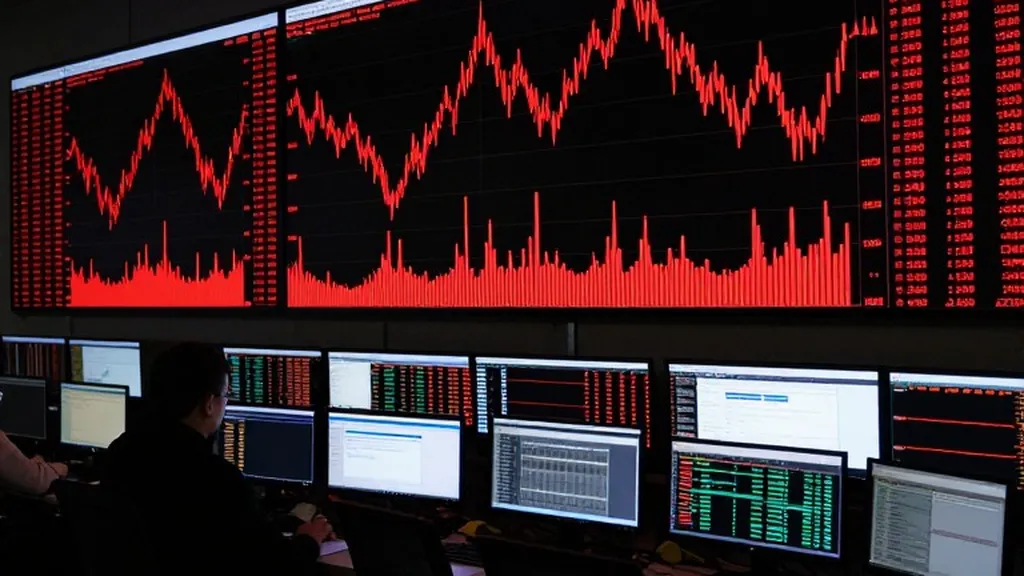
The market's reaction was immediate and severe, with the Dow Jones Industrial Average falling more than 1,800 points, or 3.4 percent, to close at 51,868. This decline erased all the gains that Wall Street had made on Wednesday, which had seen the Dow post its biggest gain of the year. The S&P 500 fell 4.3 percent, marking its worst day since April 2025, while the Nasdaq Composite dropped 5.5 percent. The New York Times noted that the selling spread through every sector of the S&P 500 and gathered pace as the day progressed, indicating a broad-based retreat from riskier assets.
For local readers in Portland and across Oregon, this type of market crash has direct implications for personal finances. Many retirees and savers hold a significant portion of their retirement accounts in index funds that track these major market indices. A drop of this magnitude means that the value of these accounts has decreased substantially in a single day. While market fluctuations are a normal part of investing, a decline of this size can be unsettling for those who are near or in retirement, as it reduces the capital available for living expenses and future growth. Small investors who have recently entered the market may also see their portfolios take a hit, particularly if they were concentrated in technology stocks.
The decline was driven by specific concerns over the artificial intelligence sector. Nvidia fell 9.2 percent, losing more than $400 billion in market value, while other major chipmakers like SanDisk, Western Digital, and AMD also suffered steep losses. The Philadelphia Semiconductor Index fell more than 12 percent, its worst day since the early days of the pandemic. CNBC reported that the selling was not limited to large companies, as smaller firms in the tech sector also saw their values plummet. This broad-based drop suggests that investors are re-evaluating the long-term viability of the current AI spending boom in light of the new political landscape.
Analysts are divided on how to interpret this move. Neil Wilson, an investor strategist at Saxo UK, described the event as a complete capitulation-level event in tech stocks, suggesting that the market may be overcorrecting. Dan Ives, a tech analyst, noted that Democratic control of the Senate will create major hurdles for AI and tech legislation in the coming years. Ted Parkhill, founder of Incline Investment Management, argued that the market is moving from the promise of AI to the price of AI, implying that valuations may need to adjust to reflect more realistic growth expectations. These views highlight the uncertainty that now pervades the investment community.
Historical data offers some context for investors looking ahead. Frank Cappelleri, founder of CappThesis, pointed out that the Nasdaq was higher 12 months after the election in all but one of 13 midterm cycles since 1974. However, he cautioned that the path to recovery can be volatile. Gene Goldman, chief investment officer at Cetera Financial Group, predicted a recovery, stating that corrections in a bull market are typically short-lived. He suggested that while the current situation is ugly, a bounce back is likely to occur soon. This historical perspective provides a measure of comfort for long-term investors, though it does not eliminate the short-term pain of a significant market drop.
The volatility index, or VIX, jumped to above 28, its highest reading since March 2026, reflecting the heightened fear in the market. The 10-year Treasury yield fell to 4.83 percent as investors sought the safety of bonds, a common move during periods of stock market stress. This shift in investor behavior indicates a desire to protect capital amid the uncertainty surrounding the future of the AI sector. For local savers, this may mean that the relative appeal of bonds versus stocks has shifted, potentially influencing how they allocate their portfolios in the coming months.
The tech industry itself is responding to the public's concerns. Greg Brockman, president and co-founder of OpenAI, acknowledged that the industry had been surprised by the reaction to data centers and emphasized the need to engage more directly with local communities. Dina Powell McCormick, president of Meta, stated that the industry needed to double and triple down on telling the story of AI to the public. These comments suggest that the tech sector is aware of the growing political and social resistance to its expansion, a dynamic that will likely continue to influence market sentiment in the weeks ahead.
Source: BBC News, The Guardian with Reuters, The New York Times, CNBC
More Business · Bad Business · Report a business · Got a Story?