Libya's eastern leader trades maritime deal for presidential bid
Saddam Haftar's push to become president of Libya hinges on a US-brokered power-sharing agreement that requires Turkish approval.
By Lily Carter ·

Residents of eastern Libya face a potential shift in national leadership as Saddam Haftar, son of military commander Khalifa Haftar, moves to secure the presidency. Haftar’s strategy relies on a power-sharing arrangement between Tripoli and Benghazi that the United States is currently negotiating.
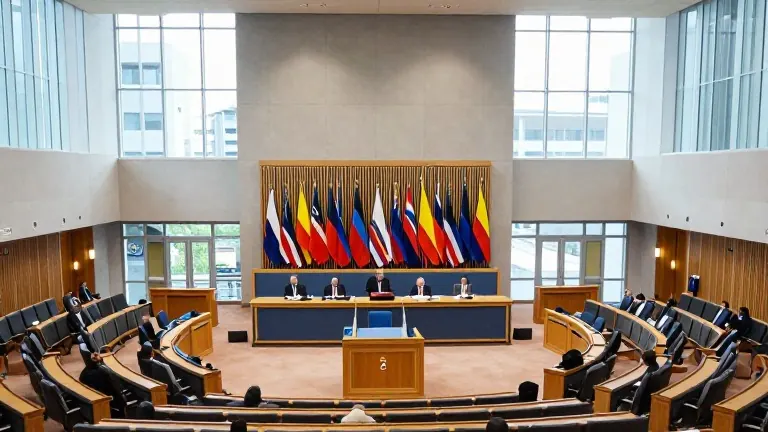
The diplomatic maneuvering accelerated on October 20, when the House of Representatives in Benghazi ratified the maritime memorandum signed by Tripoli and Turkiye. The vote reversed nearly seven years of opposition in the east to the deal. While the European Union, Greece, Israel, and Egypt condemned the ratification, the move appears designed to win Ankara’s support for Haftar’s candidacy.
Saddam Haftar controls eastern Libya through his father’s military command. His path to the presidency required removing political obstacles within the legislature. Two weeks before the maritime vote, lawmakers ousted House of Representatives speaker Aguila Saleh. Saleh had held the position for 12 years and served as a key ally for Cairo and a vocal critic of the Turkish agreement. His removal also diminished the de jure authority from which Khalifa Haftar derives his command.
The ousted speaker was replaced by Al-Salhin Abdulnabi, a member of the same Obeidat tribe. Abdulnabi previously chaired the Libyan-Turkish friendship committee. His appointment aims to manage tribal reactions and signal the chamber’s alignment with Ankara. The US initiative is championed by Massad Boulos, President Donald Trump’s senior adviser for Arab and African affairs. The deal could install Saddam as president if Washington can overcome objections from Athens, Nicosia, and Jerusalem.
Regional reactions vary in intensity and motivation. Abu Dhabi supports the succession, viewing Saddam as its most loyal client in the region. Egypt objected primarily to the encroachment on its exclusive economic zone, framing its statement in legal terms. Cairo maintains a closer relationship with Ankara than in the past, particularly regarding Sudan and the Red Sea. If Washington rejects the deal, Cairo could support Saddam’s brother, Khaled Haftar, who serves as chief of staff for the Libyan Arab Armed Forces.
Saddam Haftar now faces a delicate balance between his patron in Abu Dhabi and his partner in Ankara. He has already spent a key diplomatic asset by securing Turkish approval. His remaining leverage includes the potential to cut off support for Sudan’s Rapid Support Forces, a move that would please Ankara and Cairo but risk his relationship with Abu Dhabi. The outcome of the US negotiations will determine whether the maritime document that previously halted his father’s 2020 offensive becomes the foundation for his own rule.
Source: Al Jazeera