Five red states Trump won by double digits are now Senate toss-ups
Shifting polling data and high spending have transformed races in Alaska, Iowa, Kansas, Ohio, and Texas, complicating the path to Senate control.
By Wyatt Cooper ·
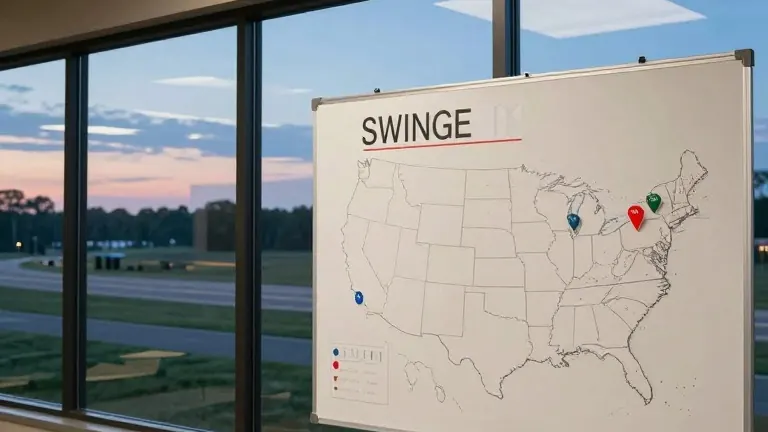
Democratic candidates are holding even ground in five states that Donald Trump won by double digits in 2024. According to the Cook Political Report, Alaska, Iowa, Kansas, Ohio, and Texas are now classified as Toss Ups. This shift contrasts with the early expectations of the cycle, which viewed Democrats as longshots for Senate gains in predominantly red districts.
The competitive nature of these races is driven by sustained polling momentum and heavy advertising. Sen. Kirsten Gillibrand, chair of the Democratic Senatorial Campaign Committee, described the party as 'very energized' by the presence of candidates in deep red and purple locations. She noted that voters appear to want change and that the party has strong talent on the field.
Republicans counter that the Democratic push has reached a 'fever pitch' and involves 'desperate conspiracies' to defraud voters. Bernadette Breslin, press secretary for the National Republican Senatorial Committee, pointed to the Alaska race where a recruiting scandal involving the campaign for Democrat Mary Peltola has created uncertainty. The incumbent, Dan Sullivan, is named in the controversy regarding alleged efforts to recruit the Democratic nominee.
The shift in ratings extends beyond the five toss-up states. North Carolina, which Trump won by three points in 2024, is now rated a likely flip for Democrats. Former Gov. Roy Cooper is widely viewed as the presumptive winner, a view President Trump acknowledged during a recent campaign stop. Conversely, Georgia, once a top target for Republicans, is now a likely hold for Democrat Jon Ossoff.
Democrats require a net gain of four seats to secure control of the Senate. While the field offers multiple opportunities, the outcome depends heavily on Republican turnout. Low GOP participation could allow Democrats to capture six or seven seats, whereas higher turnout might limit gains to one or two. Republicans still have viable targets in Michigan, New Hampshire, and Minnesota, where winning even one race would complicate the Democratic math.
In specific races, candidate quality and local issues are driving the competitiveness. In Ohio, former Sen. Sherrod Brown is challenging incumbent John Husted, with Democrats leveraging economic concerns and AI data center growth. In Texas, Democrat James Talarico has led in nearly every poll since the primary, a stark contrast to past campaigns where challengers rarely led. The state has seen more than $500 million spent on the race since the primary, with Republicans accounting for more than $300 million of that total.
Other competitive states include South Carolina, where Democrat Annie Andrews is challenging a novice Republican candidate in a state Trump won by 18 points. In Minnesota, Democrat Peggy Flanagan holds a slight edge despite Republican efforts to link a Medicare fraud scandal to state oversight. These races illustrate a broader trend where national political winds are pushing traditionally red states toward the center.
Source: KGOU