Michigan Voters Face Decisive Midterm Slate
The state decides its governor, U.S. Senate seat, and all legislative seats on Tuesday, with key counties in the Detroit metro area expected to determine the final outcome.
By Wyatt Cooper ·
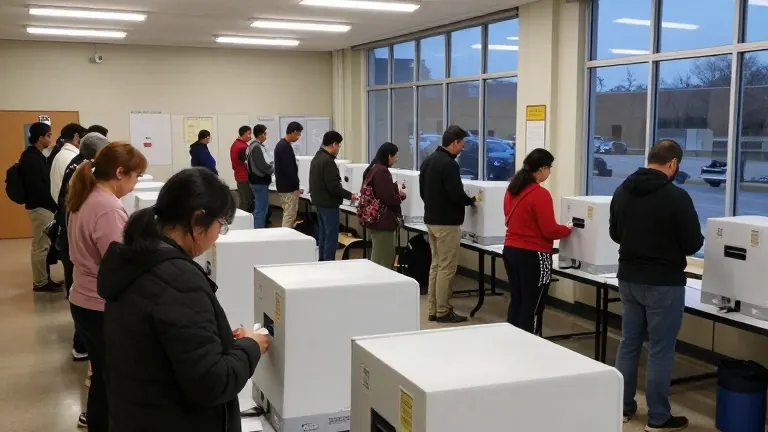
Michigan voters go to the polls on Tuesday to settle a slate of contests that will likely determine control of the U.S. Senate and the state capitol. The state serves as a major electoral battleground this cycle, featuring fierce competition for the governorship and congressional districts.
In the U.S. Senate race, Democrat Abdul El-Sayed faces Republican Mike Rogers to replace retiring Sen. Gary Peters. El-Sayed, a former Detroit public health official, has positioned Rogers as a proxy for President Donald Trump. Rogers, a former congressman who lost the state's other Senate seat to Elissa Slotkin in 2024, argues El-Sayed is too extreme for the state. The race drew national attention from President Trump, Vice President JD Vance, and former President Barack Obama, who all campaigned in the final days.
For governor, Democratic Secretary of State Jocelyn Benson challenges Republican Rep. John James to succeed term-limited Gov. Gretchen Whitmer. Democrats are also targeting four net gains in the U.S. House to retake the chamber. Key House battles include the 4th District, where eight-term Rep. Bill Huizenga faces state Sen. Sean McCann; the 7th District, where Rep. Tom Barrett runs against community organizer William Lawrence; and the open 10th District, which features candidates Mike Bouchard and Christina Hines.
All state Senate and state House seats are up for election. Democrats defend a slim state Senate majority while Republicans hold a narrow state House majority. Wayne County, home to Detroit, is a critical Democratic base with approximately 37% Black residents and the nation's highest share of Arabic, Middle Eastern, or North African descendants. If elected, El-Sayed would become the first Muslim member of the U.S. Senate. Saginaw County in central Michigan remains a decisive swing area, having backed the statewide winner in nine consecutive presidential elections from 1992 to 2024.
Polls close at 8 p.m. local time across most of the state, which is 8 p.m. Eastern Time. Some polls in the Upper Peninsula close at 9 p.m. Eastern Time. Under a 2023 law, cities with at least 5,000 residents may process absentee mail ballots up to eight days before Election Day. This change aims to prevent the slow count seen in 2020, when a large volume of mail ballots delayed final results. In 2024, the first results appeared six minutes after polls closed in most areas, with the count reaching 99% by 4:40 a.m. Eastern Time the following day.
About 42% of the vote in the 2022 gubernatorial race was cast early or by mail. Recounts are automatic in statewide races if the margin is 0.1% or less of total votes cast. Candidates may also request a paid recount if they hold a good-faith belief that a counting error changed the outcome.
Source: Michigan Public