Paraguay's President Resigns After Digital Bank Collapse
Santiago Peña stepped down amid a political crisis triggered by the failure of Ueno Bank, which left millions of depositors without access to their funds.
By Lily Carter ·
President Santiago Peña resigned from his post on Thursday, stepping down after the collapse of a major digital bank tied to his administration.
The political fallout from the banking crisis began in 2023 when Ueno Bank received its license. The institution expanded rapidly, opening more than 70 branches and attracting customers with generous supermarket cashback offers. By last year, two out of every three Paraguayans held accounts with the bank. The entity also held approximately $850 million in public funds, including $380 million from the state pension and health fund.
Concerns about the bank's stability emerged in June when central bank inspectors identified a pattern of high-risk loans granted to entities linked to the bank's owners. These loans often exceeded legal limits and lacked sufficient collateral. In September 2025, nearly $39 million was transferred to three related companies in a single day. Despite these findings, Peña previously dismissed the warnings as a smear campaign. The crisis came to a head this week when the central bank intervened in Ueno Bank due to solvency issues, freezing the accounts of millions of depositors.
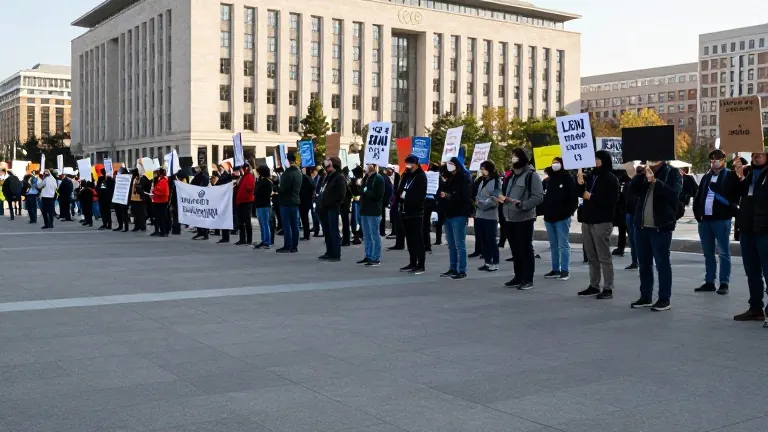
Public unrest followed the intervention. Protests erupted in Asunción, where demonstrators clashed with police who used pepper spray and rubber bullets. Protesters, including retired workers and university students, accused the government of theft. Luis Pineda, a demonstrator, stated that the president and the Colorado Party had stolen their savings. Belarmino Balbuena, another protester, described the collapse as an injustice against honest citizens who trusted the financial system with their life savings. Eight Ueno Bank executives were detained, including president Juan Manuel Gustale and CEO Federico Miguel Vázquez, a former business partner of Peña.
On Thursday, the Chamber of Deputies voted unanimously, 78 to 0, to begin impeachment proceedings against Peña for an alleged conflict of interest. This vote followed his announcement of resignation in a video posted on X. Peña said he was leaving to preserve the stability of the country and its democratic institutions. He apologized for the situation but stopped short of admitting full responsibility for the banking crisis. The resignation letter sent to the Congress head emphasized the priority of returning depositors' savings.
The impeachment process now moves to the Senate, which requires a two-thirds majority to formally remove the president. Vice President Pedro Alliana is next in the line of succession to complete the term through August 2028. Peña, a 47-year-old economist who previously worked at the International Monetary Fund, maintained a close alliance with U.S. President Donald Trump. He also held a stake in a company linked to Ueno Bank until last year. Under his leadership, Carlos Carvallo, who led the predecessor entity to Ueno Bank, was appointed head of the central bank, the very institution tasked with supervising the digital lender.
The swift resignation follows a period of intense scrutiny regarding the relationship between the ruling Colorado Party, regulatory bodies, and the business elite. While Paraguay has seen stable economic management and rapid growth, the banking failure has intensified debate over long-standing ties between political power and financial institutions. The logo of Ueno Bank has already been removed from the national stadium, which previously bore the bank's name.