South Africans Vote in Local Elections
Voters decide leadership for 257 municipal bodies while the African National Congress faces its strongest challenge in a decade.
By Anthony Brooks ·
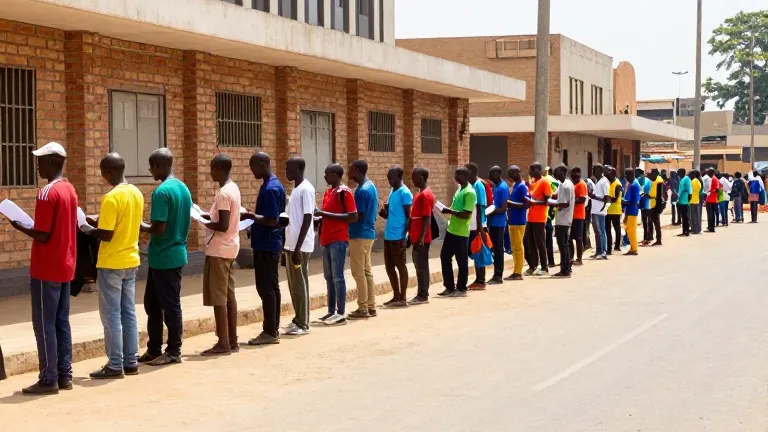
South African voters cast ballots on Wednesday to select leaders for the country's eight major city municipalities, 44 district councils, and 205 local councils. The vote serves as a direct assessment of the African National Congress, the party that ended white minority rule but has seen its support erode steadily over the past ten years.
The contest for Johannesburg, the nation's largest city and economic hub, stands as a primary focal point. The city, home to approximately five million residents, has struggled with unreliable water and electricity services. These infrastructural failures have fueled widespread frustration with local governance. Johannesburg has replaced its mayor five times in the four years since the previous local elections. It is currently administered by a fragile coalition led by the ANC, making it a prime target for the Democratic Alliance, the country's second-largest party.
The Democratic Alliance has nominated Helen Zille, its 75-year-old former national leader, to seek the mayoral position. Zille has used high-visibility actions to draw attention to municipal neglect, including snorkeling in a water-filled road trench and rowing an inflatable boat through a large leak in a residential area. Although voters select council members rather than mayors directly, small parties frequently hold the balance of power in forming governing coalitions.
The ANC lost less than half of the vote in the 2021 local elections, marking the first time it fell below that threshold since the end of apartheid in 1994. In national elections in 2024, the ANC lost its 30-year parliamentary majority and entered a coalition government with the Democratic Alliance and other groups. President Cyril Ramaphosa was reelected despite this shift. The parties now cooperate at the national level but compete aggressively for local control. Zille's campaign tests whether the Democratic Alliance can expand its influence beyond its traditional base in Cape Town.
The MK Party, led by former President Jacob Zuma, is also participating in this local vote for the first time. Zuma resigned from the presidency in 2018 amid corruption allegations and was expelled from the ANC in 2024 after founding his new party. The MK Party emerged as the third-largest force in Parliament during the 2024 national elections and maintains strong support in KwaZulu-Natal.
Key issues driving the campaign include inadequate public services, high unemployment, and crime rates. A national debate over immigration has also intensified, with groups protesting undocumented migration criticizing the Ramaphosa administration. Some political parties have made opposition to illegal immigration a central theme of their local platforms. The electorate of 62 million now chooses representatives for the next term of municipal governance.
Results from the polling stations will determine the composition of local governments across the country. The outcome will reveal whether the ANC can halt its downward trajectory in key urban centers or if opposition parties will capitalize on public dissatisfaction with service delivery. The vote concludes a period of political realignment that began with the 2024 national elections.
Source: WDIV ClickOnDetroit