Tokyo Filmmakers Detail Direct Outreach and Chance Encounters Behind Debut Features
Five directors at the 39th Tokyo International Film Festival explained how sponsor themes, personal history, and direct messages shaped their first projects.
By Wyatt Cooper ·
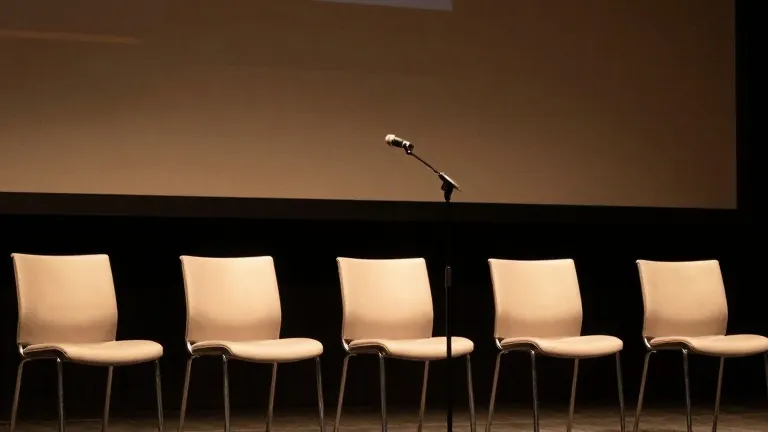
Five first-time directors discussed the unconventional paths that led to their feature films during a panel at the 39th Tokyo International Film Festival on Wednesday. The session took place at Tokyo Midtown Hibiya and focused on the Nippon Cinema Now selection. Ichiyama Shozo, the festival’s programming director, moderated the conversation.
The group included Ueda Shinichiro, Saito Kisin, Natori Satoshi, Matsumura Shingo, and Yaza Takenoshin. Their films vary widely in style and budget, yet all emerged from specific, often accidental, connections.
Ueda Shinichiro presented “Earthlings in Love,” a film shot in a vertical format. He explained that the project originated as a 30-episode microdrama series for social media. Despite its digital roots, Ueda stated the budget was equivalent to a standard independent film. “I’m from the theatrical film world, so we were making it as if it were a film to start with,” he said. This approach allowed the project to transition to theatrical release without changing its core structure.
Saito Kisin discussed the making of “Kefi,” a debut feature that deviated from its original concept. He met a producer who secured a sponsor for the project. The sponsor initially requested a theme of maternal love. During production discussions, the sponsor allowed the team to follow their own creative direction. The final film follows three sisters after their father’s death. Saito noted that the sponsor’s flexibility resulted in a film that surprised even the cast and crew.
Natori Satoshi drew on his past as a hunter to develop “Chihiro | Akemi.” He described the film as a study of the distance between a house and the surrounding woods in eastern Hokkaido. Natori said he stripped away his social roles from his life in Tokyo while in the wilderness. He cited Andrei Tarkovsky’s “Nostalghia” as a key influence, prioritizing texture and color over plot. The film won the Grand Prix at the Split Film Festival in Croatia, which led to a collaboration offer from Mexican director Carlos Reygadas, who served on the jury.
Yaza Takenoshin explained how he secured a cinematographer for “Hinotama: Ball of Fire.” He had never directed a feature or managed a budget before. He sent a direct message to Kitagawa Yoshio, a cinematographer known for his work with Oscar winner Ryusuke Hamaguchi. Kitagawa agreed to shoot the film and connected Yaza with a producer to find financiers. Yaza described the set as a generous and open environment for his first time directing.
Matsumura Shingo noted that “Between Us” allowed him conceptual freedom. The film explores the overlap between theater and reality. The panelists agreed that the Nippon Cinema Now section favors distinct, personal visions over industry standard formats.
Natori concluded by emphasizing the value of a first project. He advised filmmakers to create work they can only make because it is their debut. This perspective highlighted the unique creative risks taken by the five directors.
Source: Variety