Voters in Oregon and 10 other states decide governor races Tuesday
As polls open in Multnomah County, attention turns to ten key governorships and the national fight for congressional control.
By Samira Khalil ·
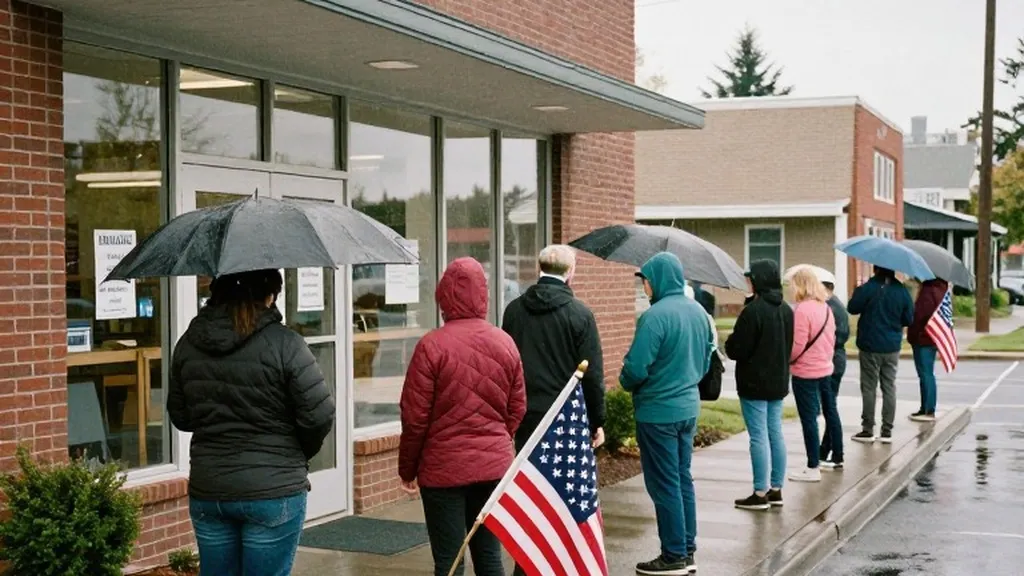
Voters in Portland, Gresham, Hillsboro, Beaverton, Tigard and Lake Oswego are casting ballots on Tuesday, November 3, 2026, in the midpoint of President Donald Trump's second term. In Oregon, polls are open from 7 a.m. to 8 p.m., though the state conducts its elections largely by mail. Residents in Multnomah County are deciding the state's U.S. Senate seat, an open race with no incumbent running, and the governorship, which is also an open seat. The parties on the ballot for these state offices include the Democratic, Libertarian and Republican parties for the Senate, and the Democratic and Republican parties for the governorship. Every U.S. House seat in the state is also on the ballot, along with various state and local offices and measures that vary by county.
The national picture is defined by a fierce contest for control of Congress and key statehouses. According to Ballotpedia, 36 governorships are up for election this year. Heading into the vote, Republicans hold 26 governor's offices and Democrats hold 24. Of the specific offices on the ballot today, each party holds 18. Nineteen of these races have no incumbent on the ballot, a result of term limits or decisions not to run. Democrats would need a net gain of two governorships to achieve a nationwide majority, a position Republicans have held continuously since 2010.
Ten specific governor races are drawing national attention for their potential to shift the balance of power. In Georgia, Republican health care executive Rick Jackson is competing against Democratic former Atlanta Mayor Keisha Lance Bottoms to succeed Brian Kemp. In Nevada, Republican Gov. Joe Lombardo faces Democratic Attorney General Aaron Ford. Ohio voters are choosing between Republican Vivek Ramaswamy and Democrat Amy Acton. Ramaswamy's campaign recently faced backlash over an advertisement featuring Acton's estranged mother. In Arizona, Democrats are defending the governorship held by Katie Hobbs in a state President Trump won in 2024.
Other high-profile contests include the races in Pennsylvania and Wisconsin, where Democrats Josh Shapiro and the Democratic candidate are defending their respective governorships in states Trump also won in 2024. In Michigan, the Democratic incumbent is facing a challenge in a state that has become a political battleground. New Hampshire presents a different dynamic, as Republican Gov. Kelly Ayotte seeks to hold her office in a state that voted for Kamala Harris in 2024. Similarly, in Vermont, Republican Gov. Phil Scott is running in a state that leaned Democratic in the last presidential election.
Kansas stands out as a traditionally Republican state that has become central to the fight for national control. The Associated Press notes that Kansas has become a focal point for both parties. Meanwhile, in Iowa, the race is competitive, with both parties viewing the state as a critical target. These ten races represent a mix of defensive holds and offensive challenges that will determine which party controls more statehouses after Tuesday's vote.
The Associated Press describes the election as a referendum on the president's performance, with voters struggling with high prices and expressing anger over an unpopular war with Iran. AP-NORC polling indicates that 35 percent of U.S. adults approve of Trump's job performance, while 25 percent approve of his handling of the economy. About seven in 10 respondents say the country is heading in the wrong direction. Most of those polled blame the president for high prices. More than 57 million people had already voted as of Monday, surpassing the early vote totals from four years ago in many closely watched states.
Republicans were bracing for a potential loss of the House and fighting to hold the Senate, with the AP noting that one or two seats could tip either chamber. Democrats were described as cautiously optimistic. President Trump held dozens of rallies, ending his schedule on Sunday in Salina, Kansas, where he told supporters, "I really want you to pretend I'm on the ballot." His schedule included stops in Mississippi, South Carolina and Texas. Many Republican candidates kept their distance from the president during this final push.
Financial resources have played a significant role in the campaign. The 2026 elections are likely to be the most expensive in history. Republican committees outraised and outspent Democratic committees, helped by Trump-affiliated groups and support from Elon Musk. However, at the candidate level, Democrats outraised their opponents. An AP analysis of AdImpact data shows that 88.1 percent of Republican general election TV ad spending went to states and districts Trump won in 2024. This includes more than $850 million spent in areas where he won by 10 points or more.
Administrative issues have also shaped the election environment. A federal judge on Monday temporarily barred the Trump administration from carrying out a plan to prevent noncitizen voting, a move critics say risks disenfranchising eligible voters. The administration also faced a court order to stop demanding that California election officials segregate ballots cast by people on lists of suspected noncitizens. The U.S. Postal Service added hours, staff and special lines to ensure mail ballots are counted on time.
Wall Street is watching the results for implications beyond congressional control. Reuters reports that outcomes could add to investor concerns about AI spending and debt ceiling negotiations. If Democrats win even one chamber, investigations and possible impeachment proceedings become likely. House Democratic Leader Hakeem Jeffries would be the first Black speaker and has outlined a 100-day agenda focused on the cost of living and oversight. A strong Democratic night would also boost potential 2028 candidates, including Gavin Newsom, JB Pritzker and Pete Buttigieg, while potentially complicating the path for Vice President JD Vance.