EU Commission roadmap sets limited 2027 goals for Ukraine without accession date
A European Commission document reported by Politico ties Ukraine's progress in accession negotiations to rule of law reforms while leaving the timetable for membership open.
By News Media House Staff ·
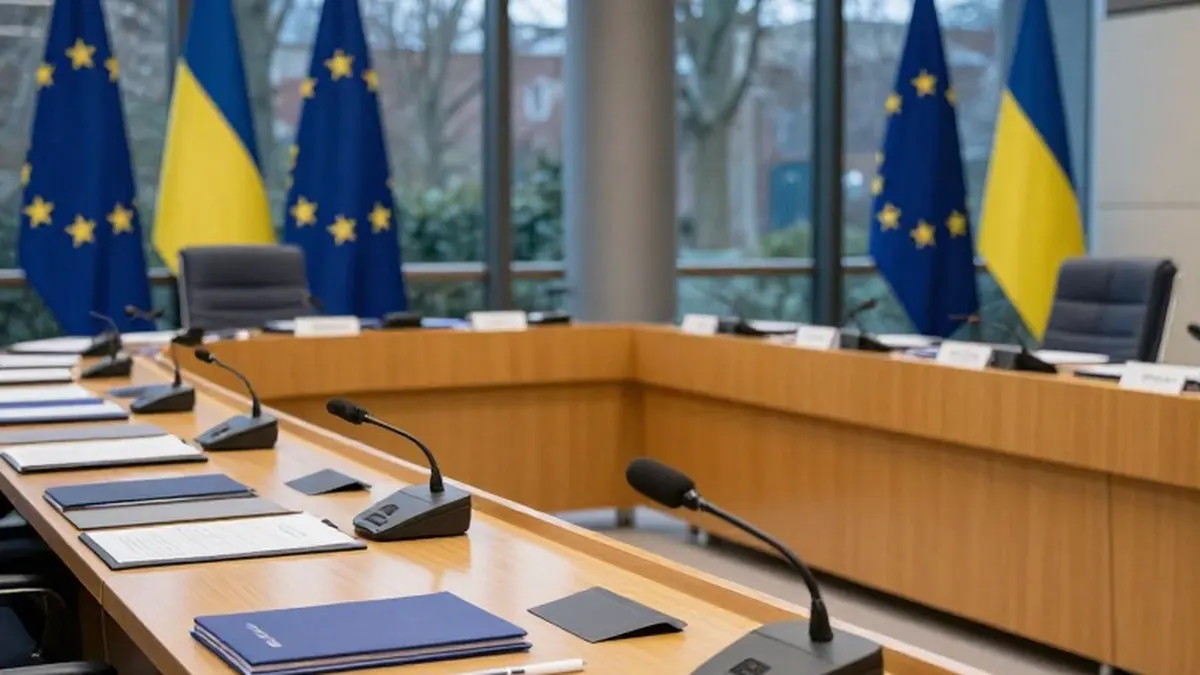
The European Commission is preparing a cautious roadmap for Ukraine's European Union accession talks, identifying seven policy areas where negotiations could provisionally conclude in 2027 without setting a date for membership, Politico reported. The document, obtained by the Brussels-based outlet, forms part of the Commission's enlargement package scheduled for presentation on November 4.
The roadmap makes progress conditional on reforms, urging Kyiv to "urgently and significantly step up the pace of the rule of law reforms". Meeting key requirements in the first half of 2027 would be necessary before negotiations could provisionally close in individual policy areas. Education and culture are scheduled for the first half of the year, with other areas targeted for the second half. The Commission describes the roadmap as a document that can be revised as talks advance, allowing additional areas to be completed earlier if reforms move faster.
The proposed timetable also points to a widening gap between Ukraine and Moldova, whose membership bids have largely advanced together. While Ukraine could provisionally finish talks in seven areas in 2027, Moldova could do so in more than 20, according to the document. That difference raises the possibility of separating their accession paths. Both countries received candidate status in June 2022 and formally opened membership negotiations on the same day in June 2024.
Ukraine submitted its membership application on February 28, 2022, four days after Russia began its full-scale invasion. Kyiv has since completed a detailed assessment of how its laws compare with EU standards, and negotiations have begun in several main policy areas. In October, Ukraine and Moldova opened talks covering the EU's internal market, competitiveness and economic growth. Membership requires candidates to bring legislation and institutions into line with EU standards across 35 negotiating chapters.
The Commission acknowledges that the changes require substantial consultation, funding and time, and has established a special task force to give Ukrainian authorities additional support. The war adds to the burden on Ukraine's government and parliament as they work to pass and implement accession legislation. Politico reported that Brussels views eventual membership as a way to anchor Ukraine in European institutions and make renewed Russian aggression more difficult.
The Commission also wants negotiations to open by the end of 2026 on two currently blocked clusters: the green agenda and sustainable connectivity, and resources, agriculture and cohesion. Its document says Ukraine has met the necessary conditions and urges the accession conference to work towards opening the remaining clusters this year. Further progress would still depend on reforms and decisions by EU member states.
The roadmap avoids giving a completion date for Ukraine's accession negotiations, taking a similarly cautious position on Albania and Moldova. Montenegro is an exception, with June 2027 envisaged for signing its accession treaty. The absence of a Ukrainian deadline contradicts earlier media reports suggesting the roadmap would target the end of 2029 for concluding negotiations.
EU rules do not expressly bar a country at war from joining, but Ukraine's membership would raise difficult questions about security, territorial integrity and mutual assistance obligations. A peace agreement would not automatically settle those questions or remove the reform requirements. Even after negotiations conclude, Ukraine would still need to complete further accession steps, including a treaty requiring approval and ratification.
Originally published by News Media House · Source: Ukrainska Pravda